If you've pulled an NDVI report on your capped cell and found a patch flagged as stressed, the first question isn't "is the cap failing." It's "did something else make the grass look that way." A lot does. Vegetation stress indices read chlorophyll and canopy structure, not cover integrity directly, so anything that changes how green or how dense the grass looks will show up the same way a gas leak or a settled area would.
Before you call out a field crew to probe for methane or check for subsidence, it's worth ruling out the boring causes first.
Mowing patterns show up as NDVI stress
Mowing crews don't cut a cap in one pass with perfectly even overlap. Turn rows, missed strips next to the fence line, and the last few passes before a mower runs out of fuel all leave the grass at a different height and a different recovery stage than the rest of the cell. Freshly cut grass has less leaf area and less chlorophyll signal per square meter than grass that's had three weeks to grow back, even though both patches are perfectly healthy.
The tell is the shape. Mowing stress runs in straight or curved lines that match equipment turning radius, often along access roads or around structures the mower has to maneuver past. Cover-related stress follows drainage, slope, or the layout of gas wells and piping underneath the cap instead. If you keep a rough mowing log, even a note of "mowed north half on the 14th," cross-checking the date against the flagged flight does most of the work for you.
Irrigation differences, drought stress, and soil depth
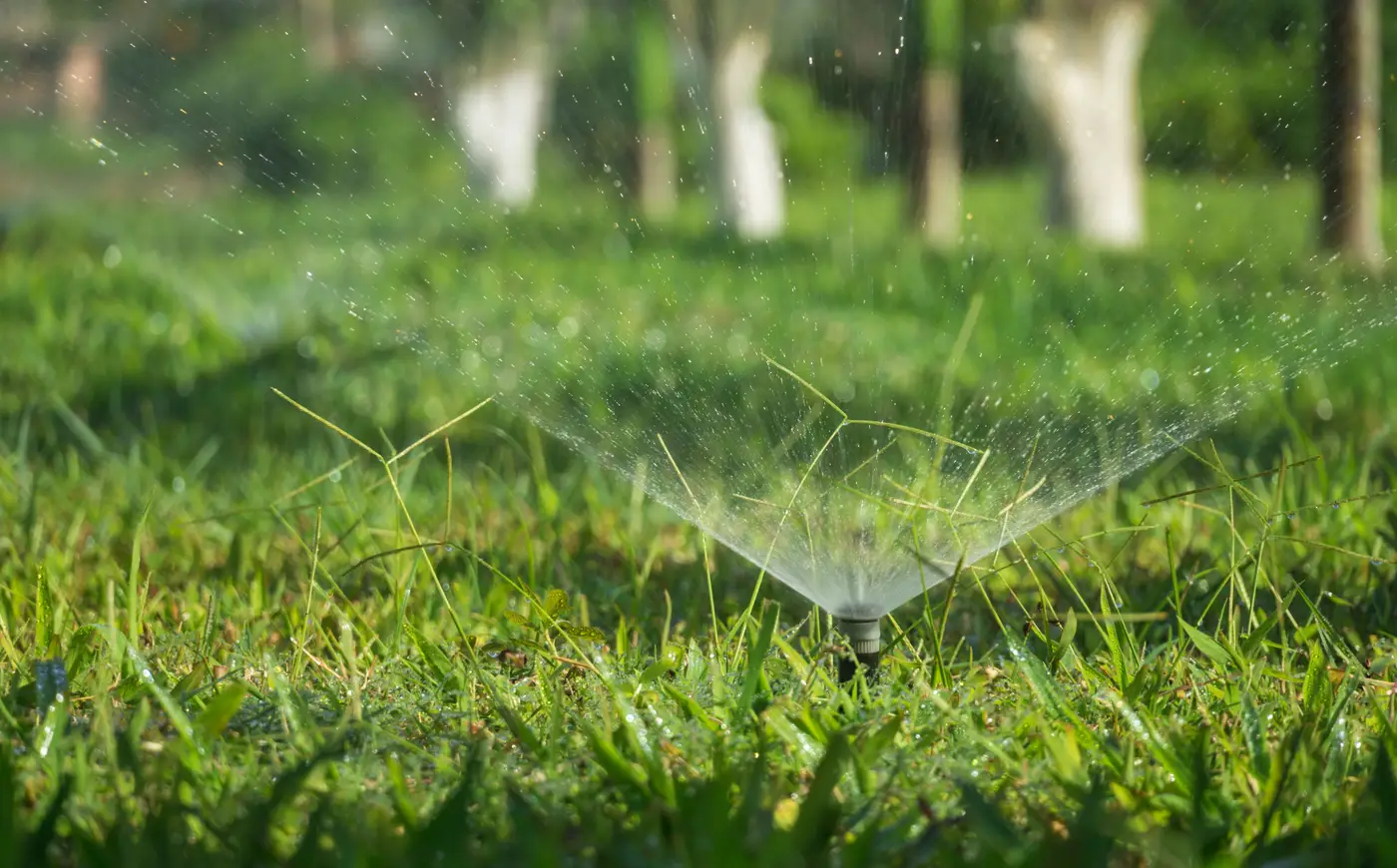
Irrigation on a capped cell is rarely even. A dedicated system waters some sections harder than others, and runoff concentrates near swales regardless of where any sprinkler head sits. A dry stretch stresses the thin-soil areas near the cap's crown before it touches the thicker soil in a low spot, and that pattern can look a lot like the classic "stress ring" people associate with gas migration. The difference is topography: a stressed area that lines up with where the cover is naturally thinnest, or furthest from a water source, is an irrigation and soil story, traceable on a grading plan rather than a probe.
Drought does something similar across the whole cell at once rather than in a localized patch. A stress flag that covers 80% of the cap uniformly after three dry weeks is a weather event. A stress flag confined to a tight, roughly circular area while the rest of the cell looks fine is the pattern worth a second look, though it still isn't proof of anything on its own.
A few other things worth ruling out before assuming cover failure:
- Seed mix and species differences. If the cover was reseeded in sections over different years, older stands and newer stands reflect differently even when both are healthy.
- Shade from adjacent structures or tree lines. A flare station, a monitoring well housing, or trees along the property line cast shadows that read as lower vigor in multispectral imagery.
- Soil compaction from vehicle traffic. Access routes for mowing equipment or gas well maintenance crews compact the soil in the same spot flight after flight, and compacted soil grows thinner grass regardless of what's happening below the cap.
- Herbicide or pest activity. Spot treatment for invasive species, or a localized grub or vole problem, stresses vegetation in a pattern that has nothing to do with the cap underneath it.
None of this means stress flags aren't worth tracking. It means a flag is the start of a conversation, not the end of one. The useful habit is keeping the context that explains a flag before it gets filed as unexplained: mowing dates, irrigation zones if you have them, known compaction routes, and where the cover was reseeded and when. Cross-reference that against the flagged area and false alarms resolve themselves in five minutes at a desk instead of a field trip.
Where it gets genuinely useful is catching the flags that don't have an obvious explanation. A stress pattern that doesn't track mowing lines, doesn't sit near a water source or shade structure, and recurs in the same spot across more than one quarter is the kind of signal that's actually worth walking out to. Landfill Cover Monitor reads vegetation stress across your capped cell from multispectral drone imagery every quarter, specifically so recurring, unexplained patterns surface before they're visible from the ground.
If you're tracking a cell where the same patch keeps coming up stressed and you've already ruled out mowing, irrigation, and soil depth, that's worth getting on the early access list for the pilot.