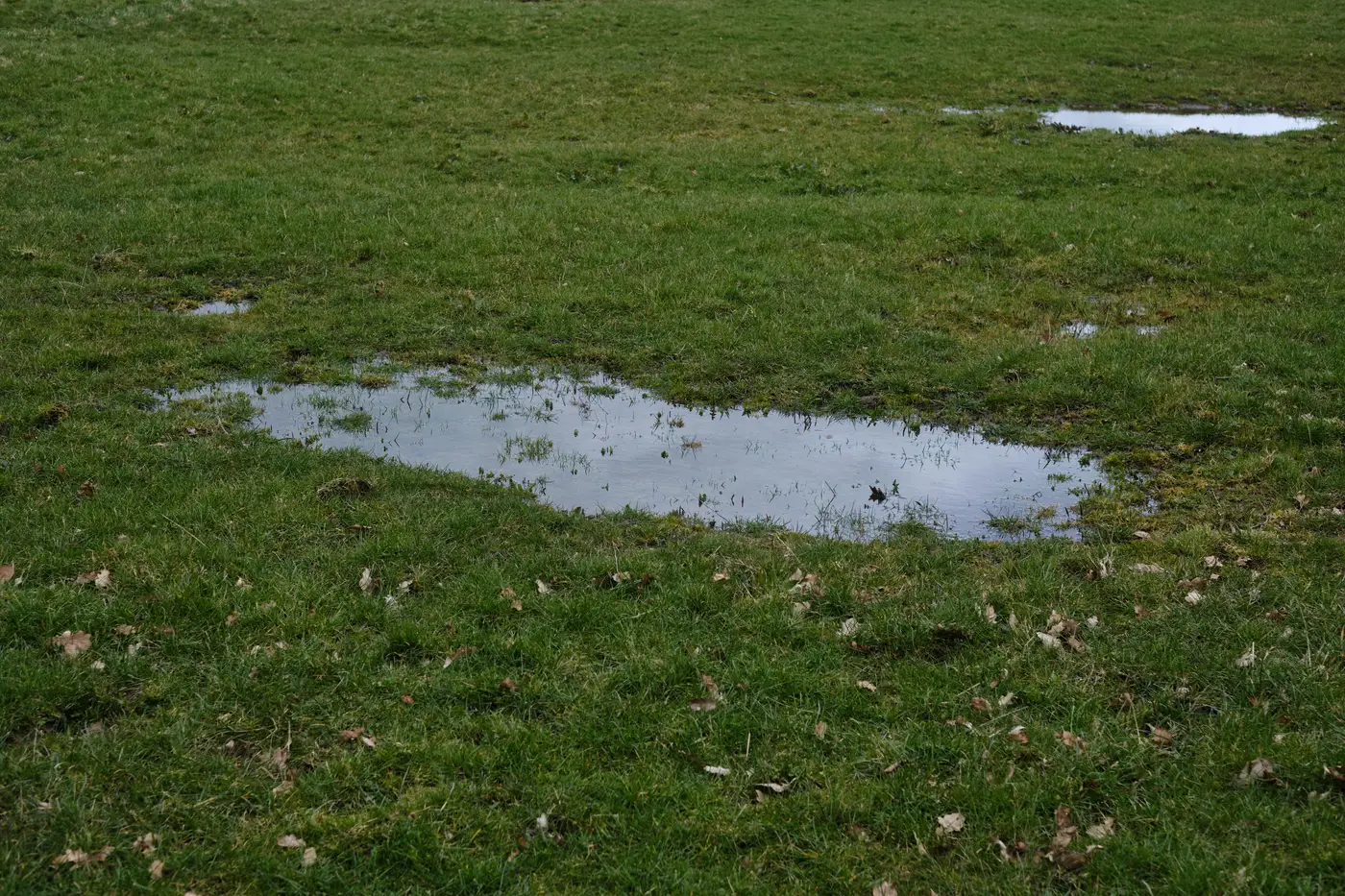
A vegetation stress patch on a capped cell tells you one thing: something under that soil is off. It could be a thin veneer that dried out, a settlement low spot holding water, or a tear in the geomembrane venting gas straight up through the root zone. Figuring out which one you've got is the scoping problem, and it's worth getting right before anyone mobilizes equipment.
Walk it before you write a work order
Ground-truth the flagged area on foot. Bring a probe. Check for elevated methane or depressed oxygen right at the surface, not just at the perimeter gas wells. Look for the physical tells: ponding after the last rain event, erosion rills cutting toward the toe, desiccation cracking in the cover soil, or a soft spot that gives underfoot in a way the surrounding grade doesn't. Pull a shallow hand auger sample if you can, down through the topsoil veneer to the barrier layer, and note the thickness. A lot of stress patches turn out to be nothing more exotic than six inches of cover where the spec called for eighteen.
Pull your settlement monument readings for that area while you're at it. If the monument nearest the flag has been dropping faster than its neighbors over the last few survey cycles, you're probably looking at differential settlement before you're looking at a liner problem, and that changes the whole repair.
Sort the failure mode before you pick a fix
Three things cause most vegetation stress on a cap, and they call for different work:
A thin or eroded soil cover stresses grass through drought and heat even when everything underneath is sound. This is the easiest case and usually the cheapest.
Differential settlement creates a low spot where water collects instead of running off. Roots sit wet, go anaerobic, and the stand thins out even with decent soil depth. Settlement monument data is your best early warning here, well before the vegetation shows it.
Gas migrating up through a stressed or breached area in the geomembrane or GCL can kill vegetation outright from the root zone up, independent of soil moisture. If your probe readings came back hot and the monument record looks flat, this is the one that needs the certified installer and the CQA paperwork, not a reseed crew.
Match the repair to what you found
If it's a thin veneer, reseeding a capped cell is a soil and seed mix exercise. Match the original agronomic spec, get cover soil back to design thickness first, and don't just overseed on top of six inches when the permit called for more.
If it's a drainage low spot, regrading a cap means bringing in borrow or reworking existing cover soil to restore positive drainage, typically back toward that 3 to 5 percent minimum grade most closure designs specify, so water sheds instead of sitting.
If probe data confirms gas or liner compromise, a geomembrane patch is a different animal entirely. That's a certified installer, a destructive or non-destructive seam test, and documentation your regulator will want to see attached to the next post-closure report.
Any of these can end up layered. A settlement low spot that's held standing water for two seasons can stress a geomembrane seam that was fine at construction. Scope for the root cause, not just the symptom on top.
Document it the way your permit expects
Photograph the flagged area before work starts, keep the probe and auger notes, and tie the repair location back to a monument ID or survey coordinate so the next inspection has something to compare against. Regulators reviewing post-closure reports want a clear chain: a flag that led to a diagnosis, and a diagnosis that led to a specific, documented fix.
Catching the stress patch early is the part most operators struggle with, since by the time it's visible from the perimeter road it's often been stressed for a full growing season already. That's the gap a quarterly vegetation read across the capped cell is built to close, flagging the patch from imagery before it's obvious on the ground.
If you'd rather see the stress flag before the walk-out than after, Landfill Cover Monitor's pilot is taking sign-ups now.